
Room guide · Kitchen decisions
Kitchen in the East: What a Vastu Review Should Check
An east kitchen, an eastern cooking point and cooking while facing east are different questions. Learn what a useful Vastu review should establish.

Published · 6 min read
If your kitchen is described as being in the east, begin with a more precise question: where is the cooking activity within the verified plan? The room’s location, the position of the burner and the direction the cook faces describe different things. Advice about one should not quietly become a conclusion about the others.
That distinction matters whether you are buying a flat, renovating a kitchen or reviewing a home you already occupy. A broad directional label gives you a starting point. A useful Vastu assessment connects it to the actual layout, the teaching framework and the decision you can make.
The aim is to understand what deserves attention before spending money on an alteration or remedy.
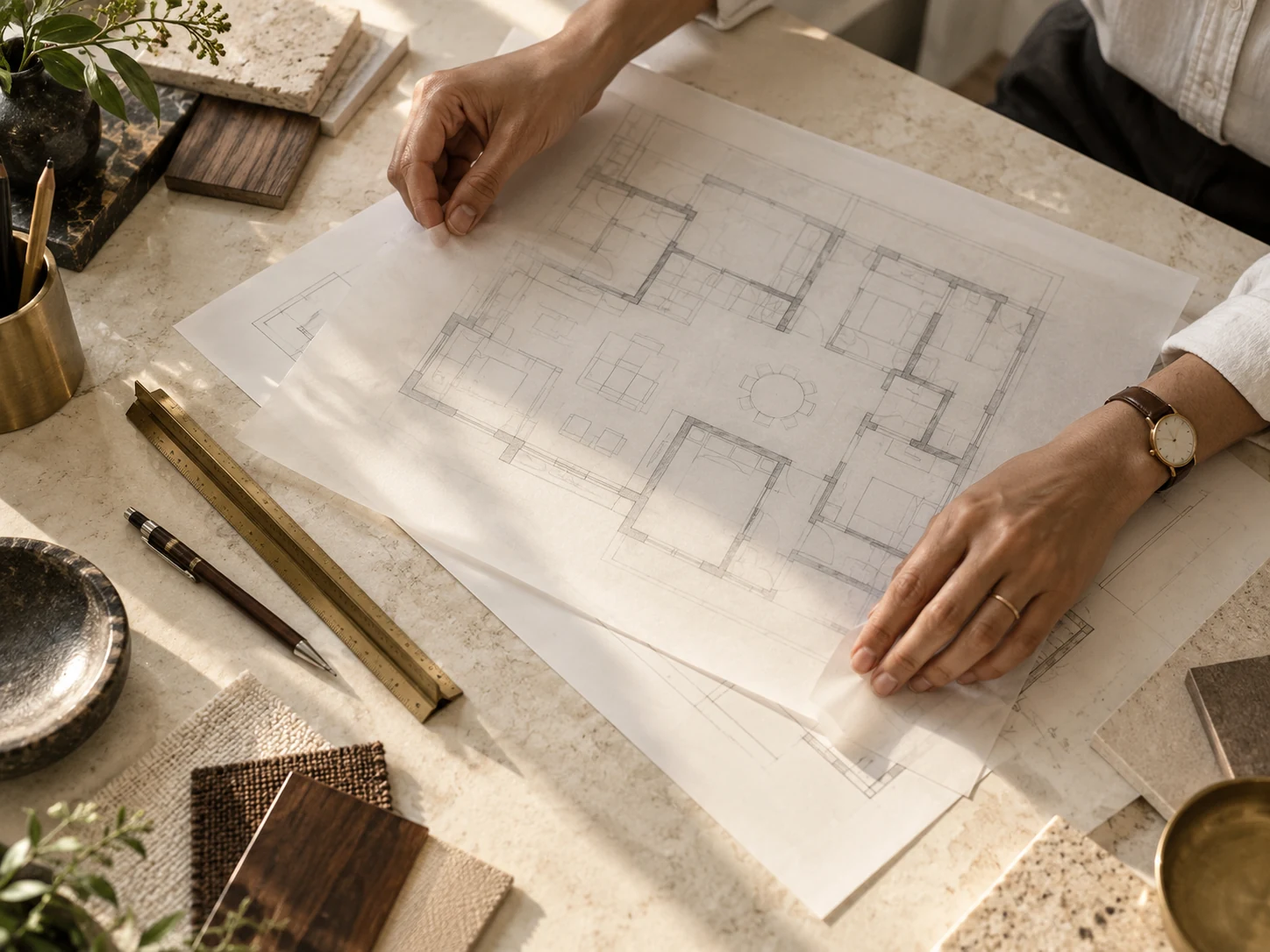
Separate the room, the burner and the person cooking
“East kitchen” can mean a room on the eastern side of the home. “East-facing kitchen” might mean its doorway faces east, or that the person cooking looks east. These descriptions are often used interchangeably in conversation, although they do not identify the same feature.
Mark each relevant feature on one current plan. This simple step makes it easier to understand the scope of a recommendation.
| Question | What to record | What it helps clarify |
|---|---|---|
| Where is the kitchen? | The room’s boundaries within the whole property plan. | Which mapped sectors the room occupies, including any overlap. |
| Where does cooking happen? | The actual hob, stove or other regularly used cooking point. | The specific location of the activity being assessed. |
| Which way does the cook face? | The person’s orientation when using the cooking point. | A separate facing question, which needs its own stated basis. |
For example, a room can extend across two sectors while the hob occupies one small part of it. Turning a person towards a different wall does not relocate the room. Moving an appliance within the room is also a different decision from moving the entire kitchen.
What does the classical south-east instruction establish?
Bṛhat Saṃhitā assigns cooking to the south-east in its discussion of room uses. The reference is 53.118 in Iyer’s English translation, corresponding to 52.116 in the linked Sanskrit edition.
This provides a specific classical instruction about allocation of an activity. That verse does not supply a cook-facing rule, an assessment of every possible eastern kitchen or a modern appliance-installation specification.
Classical sources also need to be read in their own context. Acharya’s translation of Mānasāra, 36.26, gives a different arrangement: north, north-east or the Parjanya quarter. Its chapter uses an 81-plot plan. These consulted translations should not be blended into a single universal ranking without further contextual study.
A recommendation for your home should explain how the cited teaching is being applied. Where finer zone distinctions or contemporary remedies enter the discussion, identify those as the relevant modern interpretation or MVDE application. Clear attribution makes the reasoning easier to evaluate.
Read the actual kitchen before choosing a response
My MVDE Foundation method records six things: location, physical condition, actual use, interpretive lens, evidence and a safe next step. For a kitchen, those fields turn a vague concern into a workable brief.
Location: use a current plan with a checked orientation. Record the mapping method and any uncertainty near a boundary. The 16-zone guide explains how the directional vocabulary becomes more specific.
Condition: note visible damage, water conditions, obstructions and changes from the drawing. A photograph of a damp patch records an observation; it does not establish the cause of the dampness.
Actual use: identify where regular cooking, washing, preparation and storage happen. A former utility area converted for daily cooking needs to appear in the record, even if the old plan shows another label.
Interpretation and evidence: ask which finding comes from the plan, which teaching is being applied and which detail still needs checking. Keep a household’s reported experience distinct from a demonstrated cause.
Next step: explain what to retain, investigate, repair or reconsider. The sequence should follow the finding. Selecting a stone, colour or metal first leaves the underlying question unanswered.
Two “east kitchens” can present different decisions
Illustrative example · not a client case
Imagine two homes whose sale plans both label the kitchen “east.” In the first, the family has not ordered cabinetry. The proposed room spans a sector boundary, and the hob is shown only as a furniture symbol. In the second, the kitchen is occupied, the cooking point is fixed and the family has added a second work surface since moving in.
The first review needs an accurate proposed layout and a clear record of which choices remain open. The second needs an updated account of what actually exists, including the added surface and daily use.
The directional label is the same; the information and available decisions differ. A responsible conclusion explains the particular finding and the options it supports. It cannot be derived from the word “east” alone.
Opens WhatsApp with a prepared message to +91 9873335596. Add your details, review the message and tap Send. This starts an enquiry; it does not book or pay for a consultation.
What you can prepare before a review
- Bring the current floor plan and say whether its north marking has been checked.
- Mark the actual cooking and water points, room boundaries and regular movement through the kitchen.
- Record alterations, visible defects and differences between the drawing and the occupied space.
- State the decision: purchase, new design, renovation or a specific concern in an existing home.
- Separate the changes you can consider from fixed services or shared-building constraints.
For a planned home, discuss the layout while alternatives remain on paper. For an occupied property, begin with a diagnosis of the present arrangement. Appliance, gas, electrical and building work need the relevant technical professional’s assessment; a Vastu interpretation does not specify that work.
If someone proposes a remedy, ask which established finding it addresses and why that response follows. Our Vastu remedies guide explains this decision sequence.
Common questions about an eastern kitchen
Is an east kitchen automatically unsuitable?
The broad label is insufficient for that judgment. Confirm the plan, the relevant activity location and the framework used to assess it. The classical passage above gives a south-east allocation; it does not establish a blanket verdict on every modern layout described as east.
Will facing east while cooking answer the room-placement question?
Facing and placement are separate variables. Ask for the basis of each recommendation and how it relates to the plan. Changing facing alone does not establish that the location question has been resolved.
Should I install a remedy before consulting?
Begin by documenting the arrangement and the concern. A generic chart cannot assess your appliance, installation or property conditions. Keep the proposed intervention for discussion after the finding and scope are clear.
Bring your kitchen question into a whole-property review
Property Vastu Diagnosis is the relevant starting point for questions about an existing kitchen. We clarify the property information, assessment scope and current fee before proceeding. Correction choices and implementation are separately scoped.
If your home is still being designed, consider Private Blueprint Review. For the broader activity-based approach, read Vastu for Rooms.
Start with your city, property stage and the kitchen decision you want help making.
Opens WhatsApp with a prepared message to +91 9873335596. Add your details, review the message and tap Send. This starts an enquiry; it does not book or pay for a consultation.
Sources and scope
The assessment sequence follows Ashish Kapoor’s The Scientific Vastu Foundation Course 2.0, revised 2 September 2026: verified location, condition, use, stated interpretation, evidence and next step. The preparation prompts and example are original editorial applications.
The classical comparison uses the linked Bṛhat Saṃhitā passage with edition-specific numbering and Acharya’s Mānasāra translation, 36.14 and 36.26. The corresponding Mānasāra Sanskrit was not independently checked in this review. Page 15 of the older TSV teaching PDF Entrances Toilets Kitchen contains a modern zone-based remedy chart. It is not treated here as a classical citation or evidence that an installation is safe or effective.