
Room guide · Toilet placement
Toilet Placement as per Vastu: Location, Seat Direction and Context
Locate the fixture, describe its conditions and define the decision. A clear guide to toilet placement, seat-facing and a useful property review.

Published · 7 min read
Where should a toilet be according to Vastu? In the modern 16-zone chart used in my older teaching material, east-south-east, south-south-west and west-north-west are identified as preferred toilet zones. That is a statement about a particular teaching framework. Applying it to a home requires a correctly located fixture, a stated mapping method and an understanding of the existing layout.
A bathroom’s name on a drawing leaves several questions unanswered. Where is the WC itself? Which way does the seated person face? Is the concern about an existing installation or a choice still open on paper? These details can change what you are asking the consultant to assess.
Locate the fixture, describe the conditions and define the decision. This is the starting point for a useful toilet-placement review.
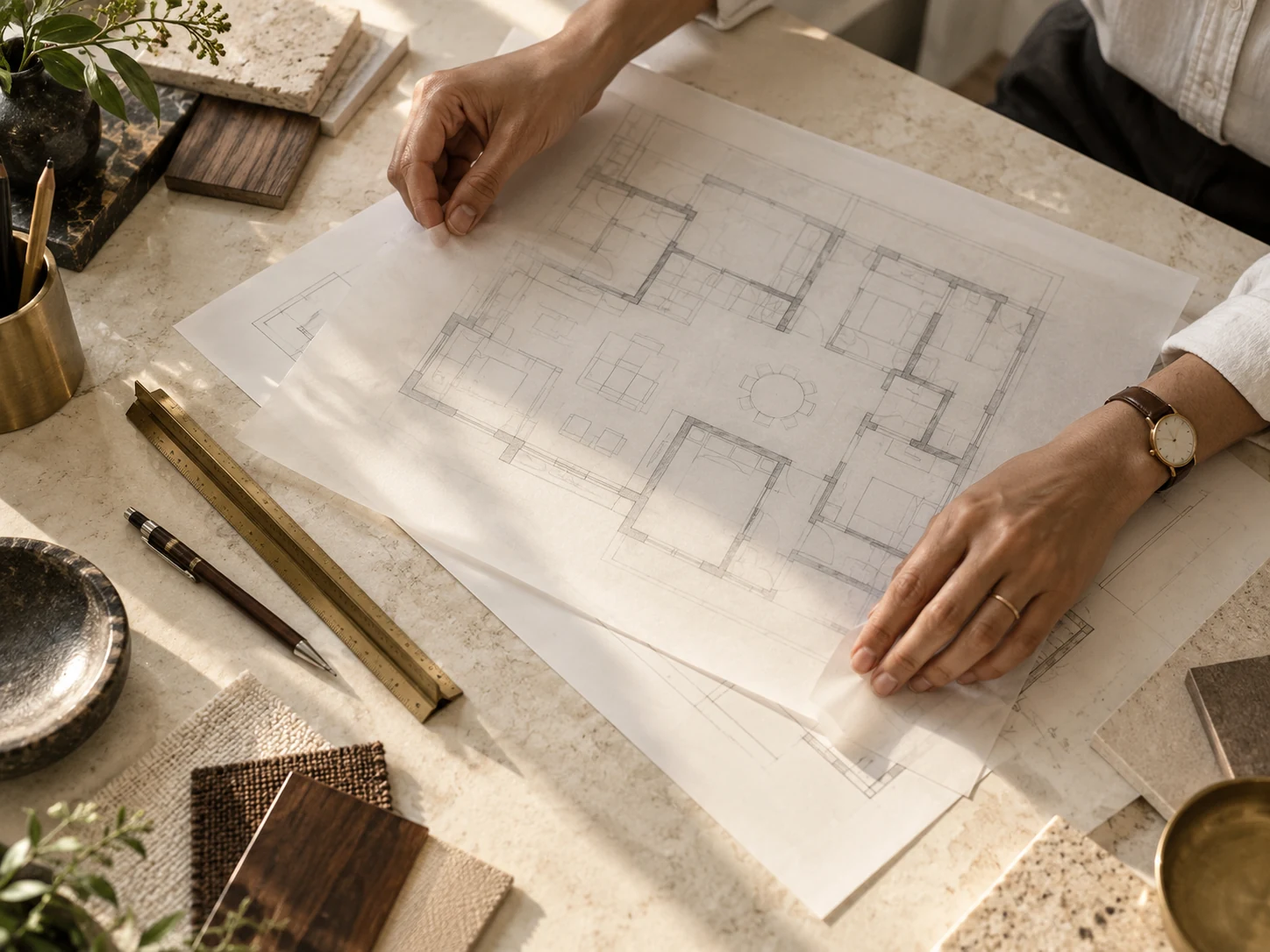
Separate room location, fixture position and facing
A bathroom can contain a washbasin, shower, storage and a WC. The enclosure may span more than one mapped sector. Calling the whole room “north-west” does not establish the position of every activity inside it.
| Question | What to record | Why it matters |
|---|---|---|
| Where is the bathroom? | The room’s outline within the current property plan. | A room label may cover several features and sectors. |
| Where is the WC? | The actual fixture position, including any change from the drawing. | A fixture-level assessment needs the fixture’s location. |
| Which way does the user face? | An arrow showing the direction faced when seated. | A north–south axis alone does not distinguish north-facing from south-facing. |
The property’s entrance direction is a further, separate measurement. An east-facing home can have toilets in different parts of its plan. Start with the 16-zone explanation if these directional terms are unfamiliar.
What the modern placement chart actually supports
Page 14 of Entrances Toilets Kitchen, an older course deck, names ESE, SSW and WNW as ideal for a toilet. Written out, these are east-south-east, south-south-west and west-north-west. They are narrower labels than east, south or west, and belong to the 16-zone framework.
The chart is credited to Vedant Maestro. It supplies no classical verse for this three-zone preference. I therefore identify it as modern teaching used in the course. It is not evidence that every classical author used the same classification or that a zone determines a resident’s personal outcomes.
My later MVDE Foundation material adds the essential assessment sequence: location, physical condition, actual use, interpretive lens, evidence and a safe next step. Applied here, that means the chart informs a question about the plan; the review must still establish the conditions and explain the recommendation.
For a proposed home, compare feasible locations while the drawings can change. For an occupied flat, record the existing installation and the constraints. A choice suitable during design does not automatically become a sensible alteration after construction.
Which direction should a toilet seat face?
First clarify whether “seat direction” means the fixture’s position or the direction the person faces. Rotating the fixture changes facing; it does not move the toilet to a different property zone.
A classical personal-conduct passage relevant to this discussion is Manusmṛti. In Bühler’s translation, 4.50 describes facing north during the day and twilight, and south at night for elimination. The surrounding passage concerns conduct, place and circumstances; 4.51 allows exceptions in shade, darkness or danger. It does not specify the permanent installation of a modern WC.
This distinction matters. A north–south axis allows two opposed facing directions, while a fixed installation generally provides one seated orientation. Turning the historical passage into “every toilet must face north at all times” loses part of what the passage says.
The course placement chart reviewed for this guide gives no separate compass rule for seated orientation. A recommendation about your seat should therefore explain which source or modern convention it follows, and how it relates to the actual room. The textual reference and edition details are in the source notes.
Record these details before considering a change
- Current plan: identify the property boundary, orientation information and exact bathroom and WC positions. Note any uncertainty.
- Actual conditions: describe leakage, dampness, recurring odour, ventilation and access plainly. Record what you can observe without assuming its cause.
- Scope of control: say whether you own or rent the property and whether building services or shared areas are involved.
- Previous work: list changes, installed remedies and the reasons they were introduced.
- The decision: explain whether you are selecting a layout, buying a flat, renovating or trying to understand existing advice.
Physical defects need appropriate investigation. A plumber or relevant building professional should assess a leaking installation and the feasibility of any proposed alteration. A Vastu interpretation cannot establish drainage performance or certify construction work.
These practical checks belong in the same brief as your Vastu question. They help distinguish what can be assessed now from what needs further information.
One bathroom, two very different recommendations
Illustrative example · not a client case
A family has an occupied apartment. Their bathroom is labelled west on an old plan. Someone recommends rotating the WC; another person recommends shifting the bathroom. The family also reports a damp patch near the floor.
The first task is to check the current plan and actual fixture. The bathroom’s broad label does not establish the WC’s precise sector. The proposed rotation addresses seated orientation, while relocation addresses position. These proposals answer different questions and need separate explanations.
The damp patch is recorded as a physical observation and referred for investigation. It does not prove a Vastu outcome. Shared plumbing and the family’s authority to alter the installation also need clarification.
The review can then identify the applicable teaching, the verified conditions and the next decision. Its value lies in a clear reason to retain, investigate or reconsider something, rather than an immediate purchase or demolition instruction.
Opens WhatsApp with a prepared message to +91 9873335596. Add your details, review the message and tap Send. This starts an enquiry; it does not book or pay for a consultation.
What about colours, strips and other toilet remedies?
The older course chart includes zone-specific colour and material suggestions. It does not supply a complete installation specification, evidence of efficacy or classical references for those treatments. A chart entry alone is insufficient to prescribe a material around your fixture.
Ask what verified finding the recommendation addresses, where it would go, what method supports it and how existing interventions affect the decision. Practical access, cleaning, repair and building constraints remain relevant.
The Vastu remedies guide explains how to assess a recommendation. Detailed correction choices and implementation should follow an agreed assessment and scope.
Questions homeowners ask
Does a toilet in a different zone mean the home is unsuitable?
A zone label alone is insufficient for that conclusion. Establish the mapping, actual fixture, conditions and available options. A property decision should include the wider layout and practical requirements, with the Vastu interpretation clearly explained.
Can rotating the seat correct its zone?
Rotation changes facing at the same location. Ask whether the concern is about orientation, position or another condition before deciding what a proposed change could address.
Is a shower room the same as a toilet?
Describe the fixtures and activities actually present. A room used only for bathing and a combined bathroom containing a WC are different factual records. The assessment should say which activity its conclusion concerns.
What if the layout cannot change?
Make that constraint part of the brief. The next step may be further verification, attention to a physical condition or a separately scoped adjustment. Neither a structural change nor a non-structural remedy should be promised before assessment.
Make the property decision with the reasoning clear
For an existing home, Property Vastu Diagnosis reviews the agreed layout, orientation, conditions and use, with explained priorities and a written next step. For a new home, Private Blueprint Review brings the question into the design stage.
Begin with your city, property stage and the choice you want help making. Mention whether a current plan is available. We will clarify the information needed, suitable scope and current fee before beginning.
Opens WhatsApp with a prepared message to +91 9873335596. Add your details, review the message and tap Send. This starts an enquiry; it does not book or pay for a consultation.
Sources and scope
The modern placement preference is from Entrances Toilets Kitchen, PDF p14, credited Vedant Maestro; the reviewed Drive file was modified 24 November 2025. It is identified here as course teaching, with no classical attribution. The assessment sequence follows Ashish Kapoor’s The Scientific Vastu Foundation Course 2.0, revised 2 September 2026.
The classical facing discussion uses Bühler’s Manusmṛti 4.45–51. The day/night verse is numbered 4.51 in the linked Jha/Medhātithi edition. These are personal-conduct passages, distinct from a modern toilet-room placement chart.
The observation prompts and apartment example are original editorial applications. No client property, case outcome or installation prescription is presented.